The Complete Guide to Cloud Consulting Services in Canada: From Assessment to Full Migration
- 15 March 2026
- Sayeed Shaik
It is impossible to take a modern-day walk through a Canadian business and NOT see the cloud permeating every nook and cranny in the company’s operations. No matter how big the company, regardless of its location in Canada (e.g., a 50 employee company in Saskatchewan or company that’s a national conglomerate with a presence in every Canadian province), or industry, the focus is on strategic cloud adoption. This includes security and consideration for the expected return on investment, in contrast to the old focus on “whether” the cloud should be adopted. For businesses considering cloud consulting services in Canada, the existence of cloud service infrastructure is a positive: Improved Successful Transformation!
The public have the impression that cloud adoption is a platform pick, a workload that’s clouded and a celebration. In reality, companies that function in the cloud spend company resources on unforeseen costs, compliance cleanups, problematic outages, and security pocketbooks—all of which are a culmination of a single problem. Plucky, but irrational methods fueled a lack of strategy and a lack of partnering.
This book is designed to catalogue the full range of cloud services available for business in Canada, so companies know what to consider when evaluating consulting partner services in Canada, and what to hope to ensue from the optimization of cloud.

Why a Cloud Strategy Must Come Before Cloud Migration?
Cloud migration is certainly appealing; vendors market a product with lower capital expenditure, unlimited scalability, and accelerated market entry. Cloud migration is essentially the act of moving your problems and making them more expensive. Migrations without a diligent strategy turn into expensive dead ends.
There is an easier approach to be taken to cloud strategy development. Questions like: Which workloads belong in the cloud, public versus private versus hybrid versus multi-cloud? What cloud provider aligns the most with your current cloud investments the team is trained on? What level of compliance do you have? And how do you approach your chosen cloud strategy?
The answers to these questions are your own. For instance, a multinational retailer versus a regional healthcare firm: both are ‘moving to the cloud’; the differences in the level of compliance, the chosen provider, and the order of migrations are everywhere. This is the purpose of a cloud consulting partner: to allow them to drown the clouds and endure the approach of your tailored cloud strategy rather than a vendor’s.
Cloud Readiness Assessment: The Essential First Step
The starting point of any respectable cloud consulting engagement is a cloud readiness assessment. This assessment is a formatted evaluation of the company’s current cloud space, including their IT infrastructure, applications, data space, and security, and is one of the company’s most valuable assets before carrying any workloads to the cloud.
A cloud readiness assessment addresses unvoiced concerns by answering important questions. For example, are your applications cloud-friendly? What weighed the most in your decision to choose which workloads to migrate to the cloud and which to keep on-prem? Are your team’s cloud skill gaps resolvable within the timeframe of the migration? What are the expected costs of your proposed cloud strategy in relation to your current expenses?
A cloud readiness assessment will not be slides with suggestions for improvement. It will be a concise, prioritized roadmap with the information your organization needs in order to plan and feel assured in the steps they take toward the cloud.

For Canadian businesses, a complete range of cloud consulting services
Cloud consulting services encompass more than migration services. The companies that gain the most from the cloud services lifecycle are those who participate in the full lifecycle of cloud services from planning and cloud services to cloud services lifecycle and optimization. The lifecycle of those services can be seen in the following.
Cloud Architecture Design
After completing a strategy and measurements for readiness, the next focus turns to cloud architecture design. This design will offer the capability to construct cloud environments that are scalable, resilient, and, most importantly, secure, in addition to the use of cloud-native services. A cloud architecture that is designed well is not solely focused on current objectives. This design is flexible for an organization’s future. Strong architecture will provide new service offerings and maintain affordability and efficiency. agility of the cloud.
Strong cloud architecture includes built-in security, from network segmentation to continuous monitoring, and everything in between. If an organization overlooks security while taking a cloud architecture approach, these organizations quickly realize that they would have saved money with a design that placed security as a primary concern.
Cloud Migration Planning and Execution
When embarking on a cloud migration, planning is key, and the selection of cloud migration strategies is equally essential. There are many strategies to choose from, including the rehost (lift and shift), replatform, refactor, repurchase, retire, or even retain strategies. Not all cloud migration strategies yield the same results. The strategy that is applied to an organization’s entire application portfolio is one of the most prevalent cloud migration costly mistakes.
Strong effective migration planning will provide the minimal approach to operational disruption. It also offers clear rollback mechanisms and defines the success for each migration wave. Once the migration of an organization is taking place, the planning migrates cloud services in a wave formation.
Cloud Cost Optimization and FinOps
Cloud cost optimization, otherwise known as FinOps, offers organizations great potential for bottom-line savings, but potential savings can quickly become realized costs if organizations do not take control of their cloud costs. Launched resources, instances, and storage, in addition to unutilized licenses, become cost sinkholes for organizations. Rapidly unused resources accrue waste, and unused resources, instances, storage, and licenses compound monthly, adding to the cost sinkhole effect.
FinOps Consulting helps organizations take control of their cloud costs through continuous cost optimization, right-sizing, and reserved instances. Savings plans and rightsizing optimization and cost governance policies are implemented to assist organizations to take control of their costs with FinOps consulting to assist. The end-state goal for organizations in partnering with FinOps Consulting is for cloud expenditure to be strategic and cost-transitive in that it is directly tied to a business outcome, rather than cloud expenditure being an uncontrolled cost sinkhole for organizations.
Cloud Governance and Compliance
Cloud governance and compliance are mandatory for Canadian organizations. Depending on an organization’s data and industry, cloud compliance may be required for PIPEDA, HIPAA, PCI DSS, GDPR, and/or other privacy and data protection laws. Cloud compliance requires more than policy documentation. It requires cloud compliance infrastructure, cloud compliance monitoring, and cloud compliance documentation for audit gap compliance.
DAY ONE embarks on completely rethinking cloud architecture framework governance by designing a cloud policy, governance, and compliance framework and ingraining cloud access governance, policy enforcement, cloud compliance governance, and cloud compliance auditing. The result is compliance turning into a proactive competitive advantage. This transformation is particularly useful for organizations engaged with enterprise clients’ cloud compliance governance and cloud transformation practices.

Cloud Modernization: Beyond Migration to Genuine Transformation
Completing a cloud transformation lift and shift migration is a gateway to modernizing the cloud. It is important to note that many enterprises will pay a premium to have on-premise legacy applications and obtain cloud pricing for on-premise performance. However, this is not the kind of transformation that organizations need to cloud modernize. Migrations that transform the cloud require a complete shift of how applications, infrastructure, and people are organized.
Application Modernization for Legacy Systems
In Canada, many organizations bear the brunt of legacy services and have high levels of technical debt. These legacy services are premium services and expensive to maintain and are inflexible to the fast pace of business. Application modernization will help services become more agile and will result in services being cloud-enabled. Services will access the modern cloud functions of flexible, premium, scalable, fully designed, and resilient services.
There’s no ‘one-size-fits-all’ approach to modernization. Some applications can be transitioned to a managed cloud service, making minimal changes to the code. Some will need changes to break monolithic logic into separate microservices. The most challenging ones may require complete re-architecting, the entire application may need to be constructed once again, using cloud-native patterns. A cloud consulting partner should be able to determine the most appropriate approach for each application, taking into account the factors of speed, risk, and the overall value for the client’s business.
Modernizing Infrastructure: Beating the Competition with a Restructured IT
The layers of compute, storage, networking, and data centre services require modernization alongside the application. Their aging hardware and the use of inflexible and unwieldy structures for the networking of a data centre and the labour-intensive and stagnant approach to providing IT services hinder the cloud-dedicated services (operated by a unified computing environment) from being achieved.
A unique infrastructure employing virtualization and the use of software-defined networking integrated with code with tools such as Terraform and Ansible and cloud-dedicated storage and compute services will allow the provision of IT services to be achieved within minutes. A business’s unique IT services can be provided to them within minutes as a result of the removal of the use of manual processes to provide the IT services, resulting in an increase in the business’s IT services being provided to them.
Kubernetes Services: Paving the Way for the Cloud
Kubernetes services are a necessity for most companies delivering applications in a container based on cloud services (IaaS, PaaS, or SaaS). Kubernetes provides the orchestration that manages containerized workloads at scale by handling deployment, scaling, load balancing, self-healing, and rolling updates.
Kubernetes is notoriously difficult to set up and use. You need to design clusters, connect and secure network storage, deal with role-based access control, set up security policies, perform monitoring, and deal with day-to-day operations, all set up correctly. Companies that try to build up Kubernetes capability from the ground up without guidance from professionals will waste months, and often years, learning and fixing things that an expert team can do in a matter of days. If a cloud provider has a Kubernetes service, then cloud professionals have the ability to design a cluster and implement and manage their cluster, along with continuously improving security and performance.
Cloud Modernization: Beyond Migration to Genuine Transformation
What matters most in your choice of cloud consulting partner is the outcome of your cloud project. This is what will distinguish a consulting partner over the competition:
– Strategic value beyond technical implementation – differentiating cloud consulting partners execute on migration and offer strategic guidance to clients on the most effective approach to migration, and the timing involved.
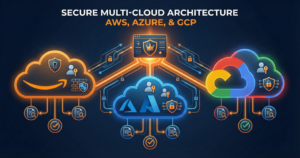
– Multi-cloud and hybrid expertise – the greater majority of Canadian organizations will work in hybrid and multi-cloud settings. Therefore, a partner is required to have cross-platform expertise, including an understanding of Microsoft Azure, AWS, and in particular, Google Cloud.
– Security-integrated practice – your organizational cloud consulting and cybersecurity should never be considered independently. It is very risky, and your cloud partner would be exposing your organization to potential threats by de-coupling the two from one another.
– Regulatory compliance knowledge – your cloud consulting partner should be well versed on the Canadian privacy framework of PIPEDA, along with the various provincial and sectoral privacy regulations, including PCI and HIPAA.
– FinOps capability – optimizing cloud costs is a continuous process, so you need partners that offer ongoing support, rather than taking a one-off approach to support during implementation.
– Proven modernization experience – application and infrastructure modernization is different to migration and so you need partners with experience across multiple successful modernization efforts and not simple lift-and-shift projects.
– Post-migration managed services – the cloud journey starts after you go live. Managed cloud services, including ongoing monitoring, optimization, and support to your partner is how your investment is sustained and improved.
UTCYBER provides partners with a unique integrated cloud consulting services portfolio with a foundation of over 20 years of leadership experience in IT across Microsoft Azure, AWS, and hybrid cloud ecosystems. It is a FinOps, migration, modernization, and Kubernetes cloud partner across the Canadian landscape, coupled with over 20 years of leadership experience in IT across Microsoft Azure, AWS, and hybrid cloud ecosystems, to guide businesses during every phase of the cloud journey, with a cybersecurity practice.
Continuous advantage, not a project: critical service
The companies that have the competitive advantage with the cloud are not those that have completed the cloud migration. They are those that have achieved continuous advantage with a cloud that provides competitive advantage and improvements with each incarnation.
Reaching that goal goes beyond only software solutions. It requires a consulting partner that possesses the right balance of strategic capability, technical knowledge, and commitment that will accompany your organization for the length of the journey. Canada’s cloud market is sufficiently developed that the right partners can be found, but finding the right partner requires asking the right questions and evaluating the real-world record of delivery, not the vendor certifications.
Your cloud transformation is much too important to be left to luck. No matter if you’re initializing your journey in the cloud with a cloud readiness assessment, planning an advanced multi-cloud migration, or need to get your out-of-control cloud spend under control with FinOps, the right cloud consulting services partner will be a multitude of times more valuable, not to mention mistakes avoided, timelines shortened, and continual optimization. It’s not a technological investment; it’s a business one.
Expertise
Ready to start your cloud journey the right way?
Book a free cloud consulting discovery session with UTCYBER — we will assess your readiness, map your options, and build a clear path forward
Our Latest Post