Beyond the Firewall: How Managed SOC Services in Canada Provide Enterprise-Grade Cyber Defence
- 15 Feb 2026
- Sayeed Shaik
Cyberattacks do not schedule themselves around your business hours. They do not wait for Monday morning or pause while your IT team is on vacation. The most sophisticated intrusions unfold slowly and deliberately often over days or weeks precisely because attackers know that most organizations only monitor their environments during working hours. For Canadian businesses operating with limited security resources, that window of unmonitored time is not just a gap. It is an invitation. This is the core problem that managed SOC services in Canda are designed to solve permanently.
A Security Operations Centre is the nerve centre of modern cyber defence: a combination of people, processes, and technology working in concert to monitor, detect, investigate, and respond to threats across an organization’s entire digital environment. Historically, only the largest enterprises could afford to build and staff one. Today, managed SOC services have democratized access giving Canadian businesses of every size the same depth of protection that was once the exclusive domain of banks and government agencies.
This post breaks down what a modern managed SOC service actually includes, why each component matters, and what to look for in a provider capable of delivering genuine around-the-clock protection for your Canadian organization.

What Makes a Modern Managed SOC Service Different From Traditional Security
The managed security services of a decade ago were largely monitoring and alerting operations. Tools would generate alerts, analysts would review them during business hours, and a ticket would be opened. By the time the ticket reached a human capable of responding, the attacker had moved laterally across three systems and established persistence.
Modern managed SOC services operate on an entirely different model. The emphasis has shifted from passive monitoring to active defence, from generating alerts to acting on them in real time, around the clock. This shift is reflected in the terminology: managed detection and response (MDR) rather than managed monitoring and security orchestration, automation, and response (SOAR) rather than manual triage. The difference is not semantic. It is the difference between knowing your house is on fire and having someone already inside fighting the flames.
The modern managed SOC is also MITRE ATT&CK-aligned, meaning its detection logic, threat hunting methodologies, and incident response playbooks are mapped directly to the real-world tactics, techniques, and procedures (TTPs) that documented adversary groups use in actual attacks. Rather than building defences around hypothetical scenarios, a MITRE ATT&CK-aligned SOC builds defences around observed attacker behaviour closing the specific gaps that real threat actors exploit.
The Scope Problem: Why Perimeter Security Is No Longer Enough
A firewall protects the network perimeter. Antivirus protects the endpoint. An email gateway filters malicious messages. Each of these tools does its job but none of them has visibility into the others, and none of them can correlate activity across your entire environment to identify an attack that spans multiple layers.
Modern attacks are specifically designed to exploit this fragmentation. An attacker might gain initial access through a phishing email, establish persistence on an endpoint, use that foothold to move laterally across the network, and ultimately exfiltrate data through an encrypted DNS tunnel with each step occurring in a different tool’s blind spot. A managed SOC eliminates these blind spots by aggregating, correlating, and analyzing data from every layer simultaneously.

The Core Components of UTCYBER's Managed SOC Service
A comprehensive managed SOC service is not a single product — it is an integrated platform of capabilities that work together to provide continuous protection. Here is a detailed look at what UTCYBER’s managed SOC delivers across twelve core service areas:
SOC Service | Core Function | Key Benefit |
Endpoint Security + EDR | Protects all devices via NGAV, behavioural analysis, and EDR telemetry | Stops ransomware, zero-days, and fileless malware at the device level |
MDR (24/7 Monitoring) | Round-the-clock monitoring with human analyst investigation and response | Drastically reduces MTTD and MTTR; active containment, not just alerting |
SIEM as a Service | Centralized log ingestion, real-time correlation, and compliance reporting | Single pane of glass for all security events; audit-ready compliance evidence |
Threat Hunting + Intel | Proactive analyst-led search for hidden threats; curated IoC and TTP feeds | Finds attackers who bypassed automated tools; reduces attacker dwell time |
Managed Vuln. Management | Continuous scanning, risk-based prioritization, and remediation tracking | Shrinks attack surface before it can be exploited |
Incident Management (IRP) | Full IR lifecycle: prepare, identify, contain, eradicate, recover, analyze | Minimizes downtime and data loss; meets regulatory notification requirements |
SOAR | Automates alert enrichment, triage, and response via custom playbooks | Eliminates alert fatigue; frees analysts for high-value threat hunting |
Zero-Day Prevention | Behavioural analytics, sandboxing, exploit prevention, and ML-driven detection | Defends against attacks with no existing signatures or patches |
Database Activity Monitor | Real-time audit of all DB access, queries, schema changes, and data movement | Detects insider threats and data exfiltration targeting critical databases |
Penetration Testing | Simulated external, internal, web app, mobile, and social engineering attacks | Reveals true gaps before malicious actors exploit them |
Security Architecture Review | Continuous design review aligned to NIST, ISO 27001, MITRE ATT&CK | Ensures security scales with your IT environment and cloud evolution |
MITRE ATT&CK Alignment | Maps all defences to real-world adversary tactics, techniques, and procedures | Closes specific detection gaps using attacker-proven intelligence |

The Three Pillars That Define SOC Effectiveness
Across all of these service components, three foundational capabilities determine whether a managed SOC actually protects your organization or simply generates expensive reports.
24/7 Managed Detection and Response (MDR)
MDR is the operational heart of a managed SOC. It provides continuous, human-led monitoring of your endpoints, networks, cloud infrastructure, and identity systems with analysts who don’t just review alerts but actively investigate them, validate them, and take containment actions. When a threat is confirmed, MDR analysts don’t send an email and wait for your IT team to respond. They isolate the affected endpoint, block the malicious IP, and begin eradication, often before your team is even aware an incident has occurred. For Canadian businesses, this active response capability is the single most important difference between a managed SOC service and a traditional managed security provider.
MDR integrates endpoint detection and response (EDR) telemetry with network detection and response (NDR), cloud security monitoring across Azure and AWS, and user and entity behaviour analytics (UEBA), creating a unified detection surface that sees the full scope of any attack, not just the piece visible to a single tool.
SIEM as a Service: The Intelligence Engine
At the centre of every effective SOC is a Security Information and Event Management (SIEM) platform, and UTCYBER’s SIEM as a Service delivers this capability without the capital expenditure and operational complexity of an on-premises deployment. Every security-relevant log across your environment’s network devices, servers, applications, endpoints, cloud platforms, and SaaS applications flows into a centralized platform where advanced correlation rules and machine learning identify patterns that no individual tool could detect alone.
The compliance dimension of SIEM is equally critical for Canadian businesses. Regulatory frameworks, including PIPEDA, HIPAA, PCI DSS, ISO 27001, SOC 2, and GDPR, all require demonstrable evidence of continuous security controls. SIEM as a Service generates the compliance reports and immutable audit trails that satisfy auditors turning your security investment into documented, reportable evidence of due diligence.
SOAR: Eliminating Alert Fatigue Through Intelligent Automation
The volume of security alerts generated by a modern IT environment is staggering—hundreds or thousands per day, the vast majority of which are false positives or low-severity events. Without automation, analysts spend the majority of their time manually enriching and triaging alerts rather than investigating genuine threats. SOAR Security Orchestration, Automation, and Response solves this problem by automating the repetitive initial stages of alert handling through pre-defined playbooks.
When an alert fires, a SOAR playbook automatically enriches it with context from threat intelligence feeds, correlates it against related activity in the SIEM, checks the affected user’s behaviour history in UEBA, and assigns a risk score all in seconds. If the score exceeds a defined threshold, the playbook triggers automated containment actions (isolating the endpoint, blocking the IP, and opening an incident ticket) and escalates to a human analyst with all relevant context pre-assembled. The result is that analysts spend their time on genuine threats rather than noise, and the Mean Time to Detect (MTTD) and Mean Time to Respond (MTTR) metrics that define SOC effectiveness drop dramatically.
Proactive Defence: Threat Hunting, Zero-Day Prevention, and Vulnerability Management
The reactive elements of a managed SOC, detecting and responding to active threats, are essential. But the organizations that achieve the strongest security posture are those that invest equally in proactive defence: finding and eliminating threats before they escalate.
Threat Hunting: Seeking What Automation Misses
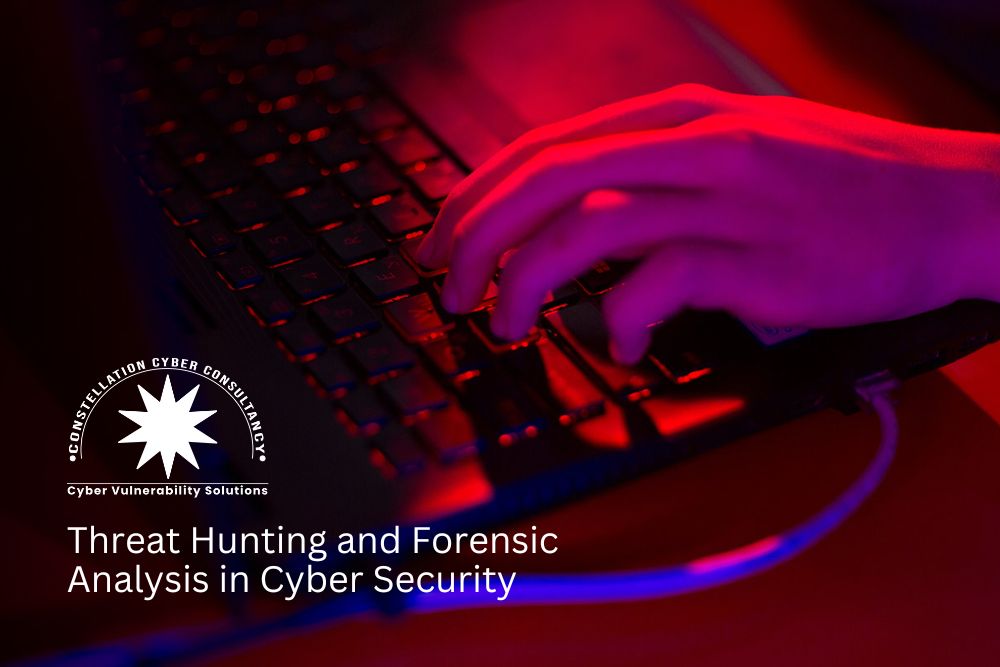
Automated detection tools are highly effective at identifying known threats and anomalies that match established patterns. But sophisticated attackers, particularly those conducting targeted, nation-state-level intrusions, specifically design their techniques to evade automated detection. Threat hunting is the practice of human analysts actively searching for these evasive threats, using hypothesis-driven investigations, custom query languages like KQL in Azure Sentinel, and deep knowledge of adversary TTPs derived from MITRE ATT&CK intelligence.
Effective threat hunting dramatically reduces attacker dwell time, the period between initial compromise and detection. Industry benchmarks suggest that average dwell times for unmanaged environments can run into months. Organizations with active threat hunting programs measure dwell time in hours. That difference determines whether a security incident becomes a manageable event or a catastrophic breach.
Zero-Day Attack Prevention: Defending the Unknown
Zero-day vulnerabilities represent one of the most difficult challenges in cybersecurity: attacks that exploit flaws for which no patch or signature exists. By definition, traditional signature-based tools cannot detect them. UTCYBER’s zero-day attack prevention service addresses this through a combination of heuristic and behavioural analysis, exploit prevention technologies that block exploitation techniques regardless of the specific vulnerability, and sandboxing environments that safely detonate suspicious files to observe their behaviour before they reach production systems.
Machine learning models trained on vast datasets of normal endpoint and network behaviour can identify the subtle deviations that characterize zero-day exploitation, unusual process spawning, unexpected memory access patterns, and anomalous network communications even when the specific exploit is entirely novel.
Managed Vulnerability Management: Closing the Gaps Before Attackers Find Them
Most successful cyberattacks exploit vulnerabilities that were known and patchable at the time of the attack. Managed vulnerability management addresses this through continuous scanning of your networks, applications, endpoints, and cloud configurations, identifying weaknesses before attackers can exploit them. Critically, it goes beyond simply generating a list of CVEs: UTCYBER’s service prioritizes vulnerabilities based on severity, exploitability, and their relevance to your specific environment, ensuring that remediation effort is focused on the risks that matter most to your business.
Specialized Protections: Database Security, DNS, and Application Security
Beyond the core SOC components, UTCYBER’s managed service extends protection to several specialized layers that are frequently overlooked but routinely exploited.
- Database Activity Monitoring (DAM) – Databases are the ultimate target of most data breaches; they hold customer records, financial data, intellectual property, and the credentials that unlock everything else. DAM provides a continuous, independent audit of every query, schema change, and data access event, detecting insider threats and exfiltration attempts that network monitoring cannot see.
- DNS Security – DNS is the phone book of the internet, and it is also one of the most commonly abused protocols for both attack delivery and data exfiltration. DNS-based filtering blocks access to malicious domains at the resolution level before the connection is even established, while DNSSEC and traffic anomaly monitoring protect against spoofing, tunnelling, and DDoS attacks targeting DNS infrastructure.
- Application Security – With organizations increasingly reliant on web and mobile applications to deliver services, application-layer vulnerabilities including SQL injection, cross-site scripting, and broken authentication represent significant risk. UTCYBER’s application security practice combines secure development guidance, vulnerability scanning, and penetration testing to harden applications throughout their lifecycle.
- Host Data Loss Prevention (DLP) – Not every data breach originates from an external attacker. Host DLP monitors and controls data movement at the endpoint level, blocking unauthorized transfers to USB drives, cloud storage, or external email, and provides the granular visibility needed to detect insider risk before it becomes a reportable breach.
The Business Case: Why Canadian Organizations Cannot Afford to Operate Without a Managed SOC
The financial case for managed SOC services is straightforward. The average cost of a data breach in Canada now exceeds $7 million when direct costs, regulatory fines, legal fees, customer notification, reputational damage, and business disruption are fully accounted for. A comprehensive managed SOC service costs a fraction of that, and its primary function is to ensure that fraction is never spent.
Beyond the cost avoidance argument, managed SOC services increasingly represent a business requirement rather than just a security preference. Enterprise customers conduct vendor security assessments before awarding contracts. Cyber insurers require demonstrable security controls before issuing policies. Regulators expect breach notification within 72 hours, a timeline that is essentially impossible to meet without a structured incident response capability already in place.
UTCYBER’s managed SOC service addresses all of these dimensions through a single, integrated platform: 24/7 MDR, SIEM as a service, threat hunting, SOAR automation, vulnerability management, MITRE ATT&CK-aligned detection, zero-day prevention, database activity monitoring, DNS security, application security, and host DLP, all delivered by a team with over 20 years of cybersecurity leadership experience, serving Canadian businesses from coast to coast.
The question is no longer whether your organization can afford a managed SOC. In today’s threat environment, the question is whether you can afford to operate without one. Every day your environment runs unmonitored is a day an attacker may be inside it already, quietly, patiently building toward an objective your business will only discover when it is far too late.
A truly effective managed SOC service doesn’t just protect what your organization has built; it protects your ability to keep building. That is not just cybersecurity. That is business resilience, regulatory confidence, and competitive advantage, continuously delivered, twenty-four hours a day
Expertise
Ready to start your cloud journey the right way?
Book a free managed SOC demo with UTCYBER — see exactly what 24/7 protection looks like for your organization, and what it takes to close the gaps your current tools are leaving open.
Our Latest Post